When to Visit the Barossa Valley: Month by Month
The weather decides how your wine day feels, not whether it runs. Summer heat makes the afternoon stops hard work, and winter rain moves you indoors. Planning Barossa Valley guided tours? Pick the month first, then the fare.
What the weather does to a wine day
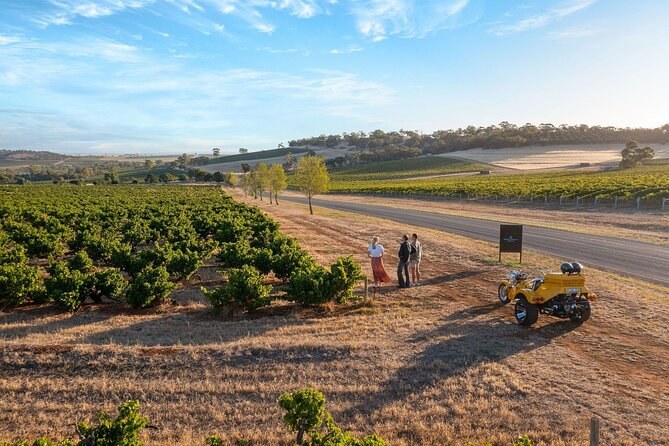
You spend most of a Barossa day moving between cellar doors, with short walks, photo stops and sometimes an outdoor lunch. In January the average high at Nuriootpa is 30.3 °C. In July it is 13.6 °C, with rain on about ten days. Both are workable, but they call for different days.
Heat hits the open-air rides hardest: the e-bike, the trike and the Mustang. Rain matters most on those same rides. A guided day in an air-conditioned vehicle copes with both. The figures below are the Bureau of Meteorology's averages for Nuriootpa from 1996 to 2026.
The Barossa month by month
January
Expect an average high of 30.3 °C and a low of 14.7 °C. About 15.5 mm of rain falls, on around 3 days, with 10.6 hours of sunshine a day. It is the hottest month of summer. Book a morning start, and choose a day with air-conditioned transport.
February
Expect an average high of 29.4 °C and a low of 14.4 °C. About 22.4 mm of rain falls, on around 2 days, with 10 hours of sunshine a day. It is the driest month by rain days. Pack a hat and water for the outdoor stops.
March
Expect an average high of 26.3 °C and a low of 12.2 °C. About 23.3 mm of rain falls, on around 3 days, with 8.7 hours of sunshine a day. Autumn high season starts, so book a week or two ahead for weekends.
April
Expect an average high of 22 °C and a low of 9.1 °C. About 32.1 mm of rain falls, on around 4 days, with 7.5 hours of sunshine a day. The 2027 Barossa Vintage Festival runs 21 to 25 April, so book your room early.
May
Expect an average high of 17.5 °C and a low of 6.8 °C. About 46.7 mm of rain falls, on around 8 days, with 5.7 hours of sunshine a day. Rain days nearly double from April. Bring a layer for the cellars.
June
Expect an average high of 14.1 °C and a low of 5.1 °C. About 55.4 mm of rain falls, on around 10 days, with 4.9 hours of sunshine a day. Low season starts. Tours run with more space, and cellar doors are quieter.
July
Expect an average high of 13.6 °C and a low of 4.6 °C. About 58.4 mm of rain falls, on around 10 days, with 5.1 hours of sunshine a day. It is the coldest and wettest month. Plan indoor tastings and a long lunch.
August
Expect an average high of 14.8 °C and a low of 5.1 °C. About 56.7 mm of rain falls, on around 10 days, with 6.5 hours of sunshine a day. Days start to lengthen. Low season fares and quieter cellar doors continue.
September
Expect an average high of 17.9 °C and a low of 6.5 °C. About 54.5 mm of rain falls, on around 8 days, with 7.2 hours of sunshine a day. Spring arrives, but rain still falls on about eight days.
October
Expect an average high of 21.5 °C and a low of 8.3 °C. About 38.7 mm of rain falls, on around 6 days, with 8.7 hours of sunshine a day. Sunshine returns to the level of March. Book e-bike and trike days now.
November
Expect an average high of 25 °C and a low of 10.7 °C. About 35.8 mm of rain falls, on around 5 days, with 9.6 hours of sunshine a day. It is warm without summer heat. Strawberry picking opens at Beerenberg Farm in the Adelaide Hills.
December
Expect an average high of 27.6 °C and a low of 12.4 °C. About 28.5 mm of rain falls, on around 4 days, with 9.9 hours of sunshine a day. Summer begins. Christmas Day and Boxing Day close Seppeltsfield.
The seasons, and which one you want
Australia's seasons run opposite to the northern hemisphere's. Tourism Australia calls autumn, March to May, the best time to visit and the high season; June to August is low season. The table averages the Nuriootpa figures for each season.
| Season | Average high | Average low | Rain days | What changes |
|---|---|---|---|---|
| Summer: December–February | 29.1 °C | 13.8 °C | 9 | Hot, dry afternoons; start early |
| Autumn: March–May | 21.9 °C | 9.4 °C | 15 | High season; the Vintage Festival in April 2027 |
| Winter: June–August | 14.2 °C | 4.9 °C | 30 | Low season; cool, wet, quieter cellar doors |
| Spring: September–November | 21.5 °C | 8.5 °C | 19 | Warming up; greener hills |
For most first visits, choose March or April. If you want quiet cellar doors and do not mind a coat, choose winter. If you travel in summer, book a morning start.
Picked your month?
Compare the days by what the fare includes and where the day starts.
Barossa Vintage Festival 2027
The Barossa Vintage Festival has more than 75 years of history, and South Australia's tourism body calls it Australia's longest-running wine festival. It fills five days in April 2027. You will find events spread across the valley, so book your room and any festival lunch well ahead.
Closed days to plan around
A few dates change what you can do. Check these before you fix your day.
- Good Friday, Christmas Day, Boxing Day and New Year's Day: Seppeltsfield is closed.
- Sundays and public holidays: the Barossa Visitor Centre opens 10:00–16:00.
- Saturdays: the Barossa Farmers Market runs 7:30–11:30 in Angaston.
- Sunday to Tuesday: Browns Barossa Donuts is closed; the four tastings day stops there Wednesday to Saturday.
Season and weather questions
What is the best month to visit the Barossa Valley?
When is the next Barossa Vintage Festival?
Do Barossa wine tours run in winter?
How hot does the Barossa get in summer?
Next: plan the drive on getting to the Barossa Valley, see what to do on things to do in the Barossa Valley, or compare every day out on Barossa Valley Tours.