Seppeltsfield and the 100 Year Old Tawny in the Barossa Valley
The short answer. Seppeltsfield holds a Tawny from every vintage since 1878, and releases a 100-year-old single-vintage wine each year. You taste the 100 Year Old Para Vintage Tawny in its Centennial Cellar, and bookings are essential. None of the tours here includes that tasting, so book it with the estate. Several days pass the estate or stop in its village.
Seppeltsfield is the Barossa estate people come to for one glass. It is a fortified wine older than anyone pouring it. This guide covers the estate's story, the Centennial Cellar and how to book it, the Avenue of Palms, and which Barossa Valley winery tours bring you to Seppeltsfield Road.
An estate founded in 1851
Joseph Seppelt, an emigrant from Silesia, bought 158 acres in the Hundred of Nuriootpa in 1851, at £1 an acre. He named the land Seppeltsfield and first meant to farm tobacco. Later generations turned it to grapes and wine. The family business grew fast in the late 1800s, selling wines and spirits to England.
By the 20th century the Seppelts also made brandy, gin and vermouth, and owned vineyards at Great Western and Rutherglen in Victoria. Seppeltsfield stayed the family's first home in the Barossa. Today its 1888 Gravity Cellar is back in use for red wines, which move through it by gravity rather than by pump.
The Seppelt family kept the estate until 1985. After nearly three decades of corporate ownership, it returned to private hands in 2007 under Warren Randall, a viticulturist and winemaker who had worked for the family in the 1980s. Within the estate, twelve buildings are on the South Australian Heritage Register, among them the Seppelt Family Homestead of 1851.
The Centennial Collection and the 100 Year Old Para
The estate's fame rests on the Centennial Collection: an unbroken line of Tawny, with a wine from every vintage from 1878 to the current year. Seppeltsfield says it is the only winery in the world to release a 100-year-old single-vintage wine each year.
The wine is called Para, after the river that runs through the Barossa. The estate fortifies it with a brandy spirit and ages it for decades in seasoned oak. Its house style is medium-weight, with notes of lightly toasted almonds. You do not need to know fortified wine to enjoy the tasting, but it helps to know what you are holding.
- Tawny: the Para collection, every vintage from 1878.
- Apera: Australian sherry, from Fino to Oloroso styles.
- Tokay and Muscat: also held in the estate's solera cellars.
Booking a tasting at the Centennial Cellar
The Centennial Cellar is where you taste the 100 Year Old Para Vintage Tawny. Book it with Seppeltsfield before you go. Here is what the estate asks of you, as of September 2026.
| What to know | Seppeltsfield's rule |
|---|---|
| Bookings | Essential; walk-ins are not guaranteed at busy times |
| Group size | Cellar door tastings for up to 6; larger groups contact the estate |
| Fees | Tasting fees apply; some tastings are redeemable with bottle purchases |
| Dress | Presentable, smart-casual; no costumes or offensive slogans |
| Closed | Good Friday, Christmas Day, Boxing Day and New Year's Day |
| Address | 730 Seppeltsfield Road, Seppeltsfield SA 5355 |
The estate's own pages give different opening times, so check the hours on its site when you book. Other estates the tours visit are on Barossa Valley vineyards and wineries.
The Avenue of Palms on Seppeltsfield Road
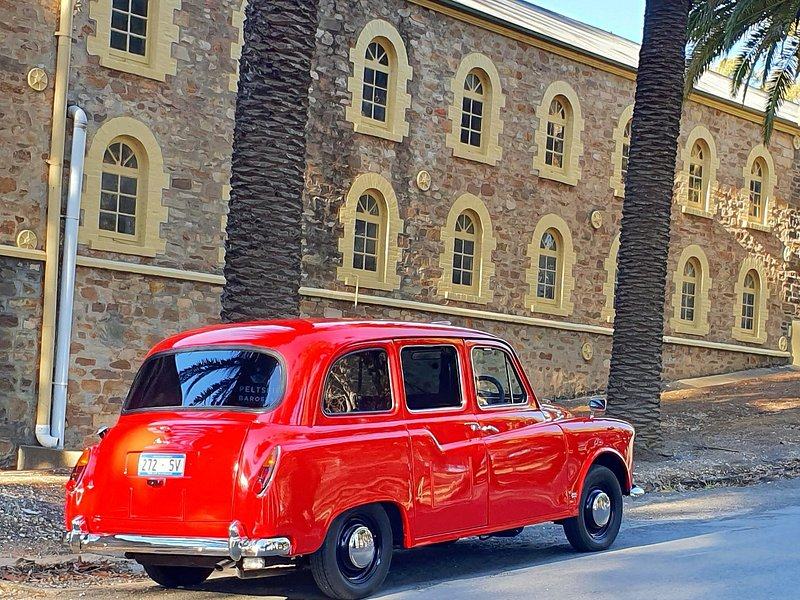
You will probably see Seppeltsfield before you taste there. The Avenue of Palms is a 5 km line of Canary Island date palms along Seppeltsfield Road. Estate workers planted them during the Great Depression, and more than 2,000 now line the road.
The premium tasting day with lunch and chocolate ends with 30 minutes on the avenue, for photographs before the drive back to Adelaide.
What else is on the estate
Seppeltsfield is now a village as much as a winery. Its cellar door sits in the 1900 Bottling Hall, and the 1850 Clydesdale Stables house the JamFactory's craft and design studios. Around them are three places to eat: FINO Seppeltsfield for a booked lunch, the Café Gardens for something casual, and pizzas and flatbreads served alongside artisan spirits.
- A self-guided history walk. Ten short podcasts, in English and Mandarin, play from QR codes at points across the estate.
- Elm Walk. A path the family planted around 1900, crossing Greenock Creek.
- The Seppelt Family Mausoleum. A steep climb off Seppeltsfield Road, for the view.
- Vasse Virgin. Olive oil skincare made on the estate.
Which days bring you to Seppeltsfield
No tour here includes the Centennial Cellar tasting. Several bring you to the estate or its road, and you can book the tawny separately on a day of your own.
- Four tastings and lunch from Adelaide: 40 minutes in Seppeltsfield village, with time for the JamFactory and Vasse Virgin.
- Private day from Adelaide: lunch at FINO at Seppeltsfield, with every tasting fee paid.
- Wine tour with Barossa pickup and lunch: 30 minutes at Vasse Virgin, passing Seppeltsfield Wines.
- Premium tasting day: the Avenue of Palms, for photos.
Getting there on your own
Seppeltsfield is just under an hour's drive from Adelaide. If you drive, whoever holds the keys should skip the tawny. The estate has free charging for electric cars in its main car park. Without a car, take the train to Gawler and a LinkSA bus into the valley, then a local taxi; getting to the Barossa lists both taxi firms.
Children are welcome if you supervise them, since it is a working winery with vehicles on the grounds. The Café Gardens are the estate's family-friendly corner, and dogs on a lead can walk the grounds.
Coming on a tour instead? Check what your day does at the estate. A stop in the village gives you time for the studios and Vasse Virgin, and a lunch at FINO keeps you at the table. If the tawny is the reason you came, book the Centennial Cellar for a visit of its own. Every estate and pickup point is on the Barossa Valley map.
Days that pass through Seppeltsfield
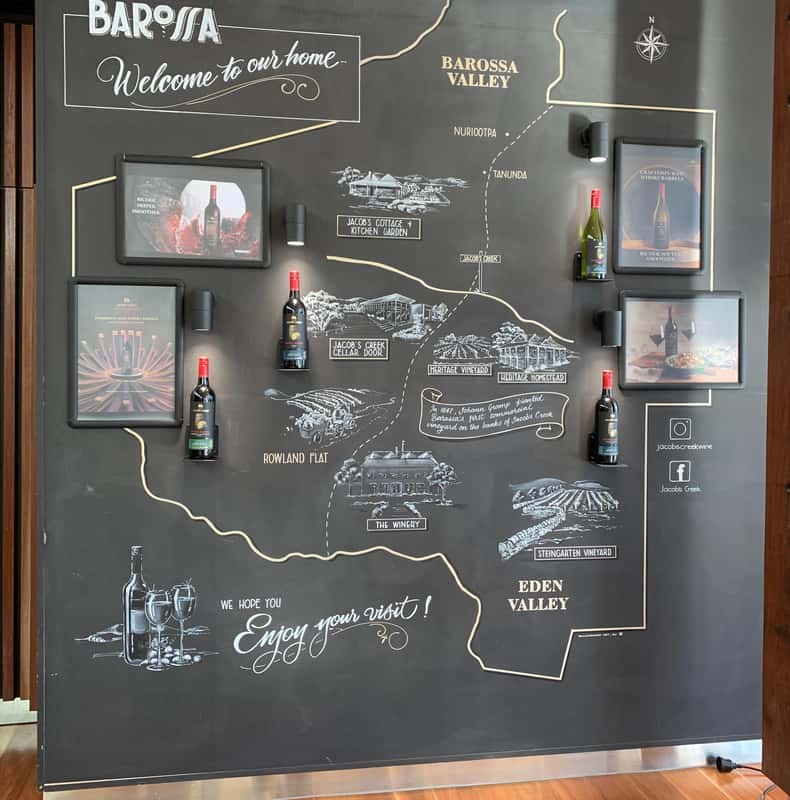
Barossa Tour from Adelaide: 4 Tastings & Lunch Included
Four tastings and lunch at Kies Family Wines from Stamford Plaza, with time in Seppeltsfield village and a chocolate stop.
From $113 per person
Check Availability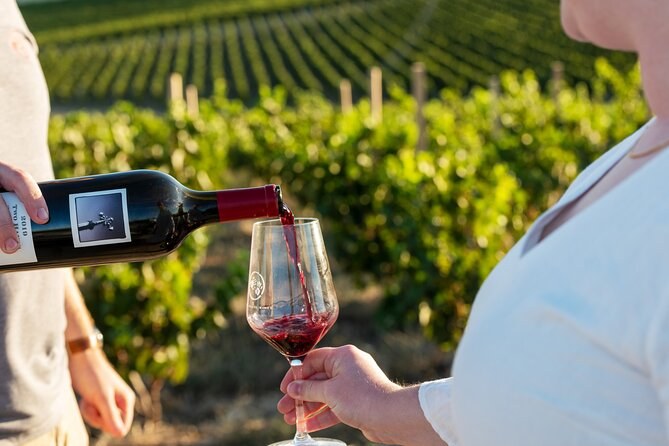
A Truly Barossan Wine Experience - High-End Private Day Tour
Your party of two to six in a private car from your Adelaide hotel, with lunch at FINO at Seppeltsfield and every tasting fee paid.
From $652 per person
Check Availability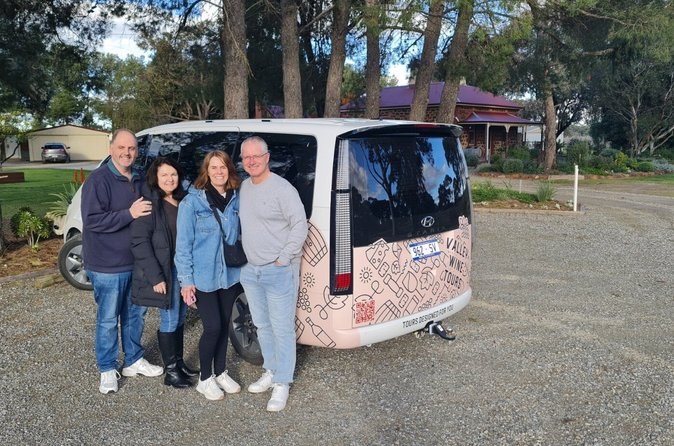
Barossa Valley Wine Tour. Local Guide, Barossa pickup, & lunch
Six hours from your Barossa accommodation at 10:00, with Chateau Tanunda, Maggie Beer's Farm Shop, lunch and the tasting fees paid.
From $177 per person
Check AvailabilityNext: book your Centennial Cellar tasting with the estate, then pick the day that brings you along Seppeltsfield Road. Every fare sits side by side on Barossa Valley Tours.